
China’s manufacturing base isn’t what it was ten years ago, and buyers who haven’t sourced from the country recently sometimes carry outdated assumptions into new supplier relationships. Labor costs have risen substantially in coastal provinces, automation has replaced a meaningful share of manual assembly work in electronics, and a wave of factories have relocated inland or into Southeast Asia to manage costs. None of that changes the core logic of quality control in China, but it does change where the risks tend to show up.
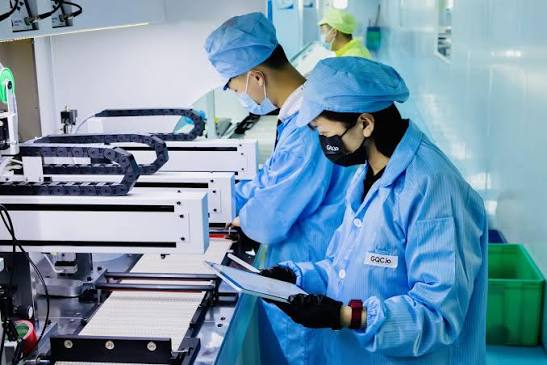
Automation cuts both ways for quality. A machine-driven process produces more consistent output than manual assembly, which is good news for buyers. But it also means defects, when they happen, tend to repeat across an entire batch rather than showing up as isolated units, because the same faulty setting or worn tooling affects every piece running through it. Catching this early, during an in-process check rather than waiting for the final pre-shipment inspection, matters more with automated lines than it used to with manual ones.
Sampling methodology hasn’t changed much. AQL remains the standard, with general inspection levels and acceptance or rejection numbers set based on lot size and the buyer’s risk tolerance. What has shifted is how inspectors document findings. Photo and video evidence is now standard practice rather than a premium add-on, partly because buyers managing supply chains remotely need enough visual detail to make decisions without a follow-up call.
Pre shipment Inspection in China tend to fall into recognizable categories depending on product type. Electronics show functional failures, component substitutions, and firmware or software issues that a purely visual inspection won’t catch, these need functional testing built into the inspection scope from the start. Hard goods and housewares show dimensional variance, material substitution, and finishing inconsistencies. Textiles and apparel show the same colorfastness and shrinkage issues found across most sourcing regions, plus construction quality that varies more by factory reputation than by region within China.
A pattern worth watching for: factories under pricing pressure sometimes substitute a cheaper material or component without informing the buyer, betting that the substitution won’t be caught in a visual check. A vinyl-coated fabric swapped for a lower grade version, or a claimed 100% cotton blend cut with polyester, are common enough that material verification, sometimes involving a burn test or lab testing for higher-value goods, belongs in the inspection scope for any category where material cost is a meaningful share of the product price.
Regional differences persist. Guangdong’s Pearl River Delta remains dense with electronics, hardware, and toy manufacturing. Zhejiang and Jiangsu handle textiles and general goods at scale. Factories inland, in provinces like Anhui or Henan, often offer lower labor costs but come with longer inspector travel times and, in some cases, less export experience, which shows up as more documentation gaps during audits.
Tariff exposure has become part of the quality conversation too, in a way it wasn’t a decade ago. Some buyers have pushed factories to shift final assembly steps to a different country to change the product’s country of origin for tariff purposes, while keeping component manufacturing in China. This kind of split production adds a layer inspectors need to track carefully, since the quality of components made in one country and the quality of assembly done in another can vary independently, and a single inspection at only one stage of that process won’t catch problems introduced at the other.
Freight and logistics disruptions add another variable worth building into an inspection timeline. Port congestion around major Chinese export hubs, particularly ahead of Lunar New Year when factories rush to clear orders before a multi-week shutdown, can compress the window between a passed inspection and the actual container departure. A shipment that passed inspection two weeks before loading isn’t automatically still in the same condition, especially if it’s been sitting in a warehouse through a heat wave or a period of high humidity, and a quick re-check before loading is a reasonable safeguard for higher-value or moisture-sensitive goods.
For buyers managing ongoing production rather than a single order, building a relationship with an inspection provider who tracks a factory’s defect history across multiple shipments adds real value over booking a different vendor each time. Recurring issues become visible in a way that a single snapshot inspection can’t show.
Working with an inspection partner that has consistent coverage across China’s manufacturing provinces, including services offered through InspectionService.com, makes this kind of longitudinal tracking realistic rather than something that only happens on paper. That pattern recognition is often what actually improves quality over a sourcing relationship’s lifetime, more than any single inspection report on its own.
Author

darshanshah834@gmail.com